
London is a living palimpsest: every street, riverbank and landmark carries traces of earlier lives stacked on top of one another. Exploring London history reveals how a trading port became an imperial capital and then reinvented itself as a global hub of culture, finance and innovation — while never losing sight of its older layers.
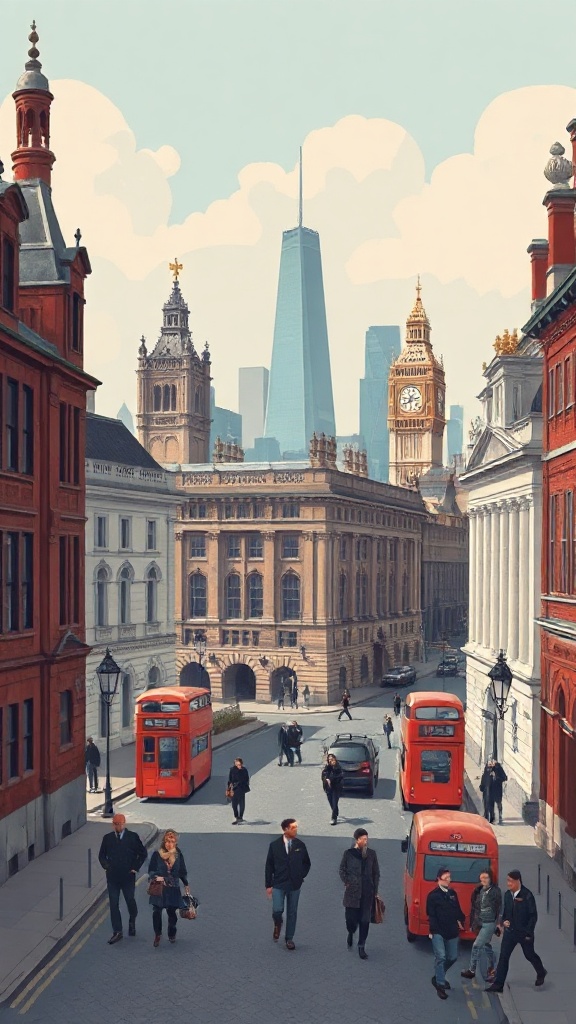
Start with the River Thames, which shaped settlement long before modern streets. Roman Londinium was established along a Thames bend, leaving behind road lines and cellar foundations that still surface in corners of the City. Medieval London grew around trade, guilds and the river’s commerce; narrow lanes, market sites and surviving city walls hint at that mercantile past. Walk the area around the Tower of London and Tower Hill to feel the overlap of Roman, medieval and later royal history.
Catastrophic events and massive rebuilding projects have also defined the city’s character.
Fires and plagues altered population patterns and architecture, prompting major reconstruction that gave London remarkable layers of design. The work of master builders, fine parish churches tucked into alleyways, and monumental civic architecture all tell the story of adaptation and resilience.
Strolling past churches by Christopher Wren, for example, highlights how the city merged baroque grandeur with an existing medieval fabric.
The industrial age brought dramatic change again.
Canals, railways and docks reshaped neighborhoods; warehouses and workers’ housing sprung up to support trade and manufacturing. Many of those industrial sites have since been repurposed, creating some of the city’s most striking contrasts — converted warehouses now host offices, galleries and luxury flats, while restored markets retain a lively public atmosphere. Docklands regeneration transformed old wharves into a modern financial quarter without erasing the physical memory of maritime life.
War left deep marks on the urban landscape. Bomb damage, emergency rebuilding and post-conflict urban planning opened the door to new architectural experiments and social housing projects. Plaques and memorials, rebuilt theaters and museums, and reconstructed civic buildings serve as reminders of loss and recovery, and they continue to shape community identities across boroughs.
Archaeology plays a starring role in uncovering forgotten chapters. Major construction and transport projects frequently expose Roman remains, medieval structures and burial sites, turning building sites into temporary time machines. These discoveries not only deepen historical understanding but often feed museum displays and local walking routes, making history visible just beneath the surface.
How to engage with London history today:
– Follow a riverside walk from the Tower toward Southwark, crossing historic bridges and passing sites connected to commerce, crime and culture.
– Visit museums and historic houses to see artifacts, models and reconstructions that map the city’s development across epochs.
– Explore lesser-known spots such as old markets, surviving alleys, and community memorials for intimate glimpses of local stories.
– Join guided walks focused on specific themes — Roman foundations, medieval guilds, industrial heritage or wartime London — to connect narrative and place.
London’s appeal is its ability to be both ancient and ever-changing. Every redevelopment uncovers more of the past, and every new project adds another layer for future generations to read. Whether you’re drawn to grand monuments or hidden corners, the city rewards curiosity: its history is never fixed, and every visit reveals something different.
