
London’s Layers: How the River Shaped a City of Continuous Reinvention
London’s history reads like a palimpsest — every era writing over what came before, with the Thames running through as both life source and boundary.
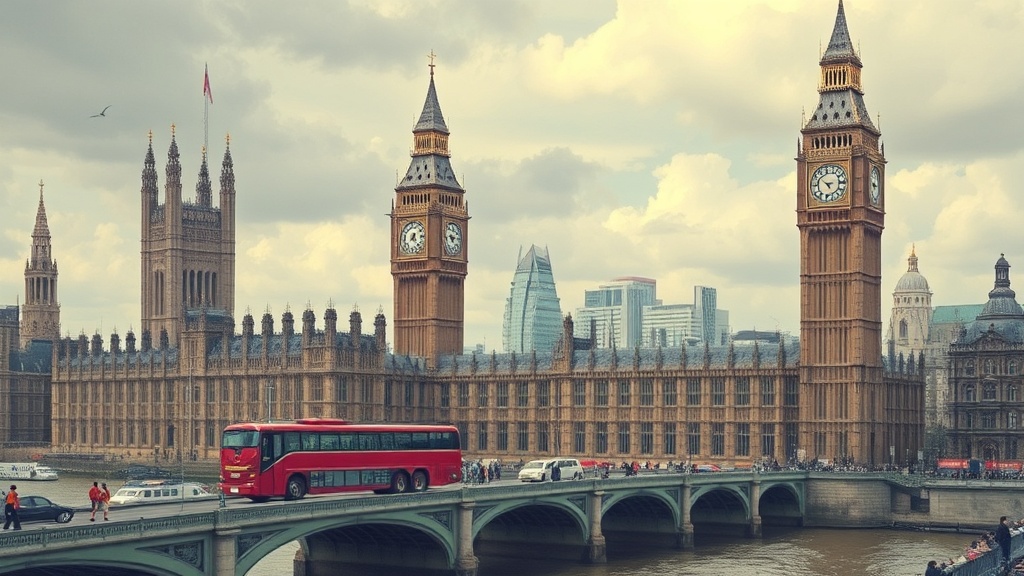
From a modest riverside settlement to a global metropolis, the city’s evolution is visible on its streets, in its buildings, and in the stories passed down through generations.
Origins along the Thames set the pattern. The river was the original highway, bringing traders, ideas, and invaders who left traces in pottery, place names, and surviving street plans. Archaeology beneath the modern surface frequently reveals Roman foundations, medieval timber, and Victorian brickwork stacked one atop the other, reminding visitors that London has always been built on what came before.
Medieval growth turned the settlement into a bustling commercial hub. Marketplaces, guild halls, and narrow lanes clustered near the river. Defensive strongholds and royal residences anchored power centrally, while parish churches and small chapels marked local life. Surviving monuments from that time include fortified towers, ancient bridges, and churches whose stones whisper of centuries of parish life.
Catastrophe and reinvention are recurring themes. A devastating urban fire once swept through much of the medieval core, catalyzing a sweeping reconstruction that reshaped the skyline. That rebuilding created opportunities for architectural innovation — a new cathedral rose, streets were reconfigured, and a handful of bold architects left a lasting imprint. The episode shows how disaster and recovery can transform urban identity.
Industrial and transportation advances brought another layer of change. As trade and industry intensified, warehouses, docks, and grand civic buildings expanded along the riverbank. Underground railways and improved roads reconnected neighborhoods, enabling daily rhythms to change and the urban footprint to sprawl. Those transport arteries became as integral to London’s character as its historic monuments, knitting together diverse districts and enabling cultural exchange.
Conflict and resilience also mark the city’s story. A period of aerial bombardment left scars across many neighborhoods, necessitating large-scale rebuilding and new approaches to housing and city planning.
The pragmatic drive to repair and modernize shaped the mid-century landscape while also sparking debates about preservation versus progress — debates that continue to define planning choices now.
Cultural layering makes London uniquely rich.
Museums preserve artifacts from every age, theatres keep centuries-old dramatic traditions alive, and public squares host modern festivals beside ancient memorials. Neighborhoods retain their local identities even as new waves of residents, entrepreneurs, and artists add fresh energy.
That tension between continuity and change is central to the city’s charm.
For visitors and residents eager to explore, the best approach is a mix of planned visits and wandering. Museum collections reveal deep timelines; guided walking routes highlight hidden alleys, ancient boundaries, and architectural details that go unnoticed from buses or cars. River walks and market mornings offer a tactile sense of how commerce and community shaped daily life across eras.
Preservation efforts now aim to balance development with heritage, encouraging adaptive reuse and careful restoration. That makes the city an ongoing experiment in how a living metropolis honors its past while remaining fit for modern life.
London’s history is not a single narrative but a layered conversation between river, stone, commerce, and people.
Each visit peels back a different layer, and every street can surprise with a fragment of the past quietly influencing the present.
