
Layers Beneath the Thames: How London’s Past Shapes Its Present
London’s streets are a living palimpsest—ancient foundations, medieval lanes, and modern glass rising in close quarters.
The River Thames is the thread that ties this tapestry together, shaping commerce, settlement and the rhythms of urban life from the moment people first made a settlement on its banks. Walk the city and you’re walking through waves of history that still dictate how London looks, functions and reinvents itself.
The earliest visible traces are often subterranean.
Roman foundations, fragments of defensive walls and pottery turn up beneath office blocks and public squares; archaeological digs routinely reveal the outline of an earlier grid under today’s chaotic geometry.
That Roman imprint established a core that would survive invasions, plagues and political upheaval, anchoring a marketplace and port that made the city a regional hub.
Medieval London built on that base with narrow alleys, guild halls and a fortified wall that concentrated trade and power within a compact footprint. Those guilds evolved into livery companies that still exist as civic institutions, preserving rituals, charitable work and architecture. Churches and civic buildings from this era continued to shape neighborhoods long after their original functions shifted.
Catastrophic events rewired the urban fabric and prompted major change.
A massive urban fire reshaped building materials and streetscapes, accelerating a transition from timber to masonry and prompting the emergence of new civic architecture. Rebuilding offered opportunities for ambitious architects to reimagine the skyline and for planners to impose broader streets and improved infrastructure—early examples of how disaster can catalyze urban innovation.
Industrial expansion transformed London from a compact trading town into a sprawling metropolis.
Riverside docks became the beating heart of global commerce; warehouses and shipyards created entire communities with distinct cultures and dialects. The advent of mass transit—pioneering underground railway technology—redefined where people could live and work, driving suburban growth and knitting disparate neighborhoods into a single economic organism.
The decline of traditional docks and heavy industry opened another chapter: regeneration. Former industrial zones were reinvented as financial districts, cultural centers and residential quarters, demonstrating the city’s knack for adaptive reuse. Iconic examples of conversion show how industrial heritage can be preserved while meeting contemporary needs—old warehouses now house offices, galleries and loft apartments, and former wharves have become promenades and parks.
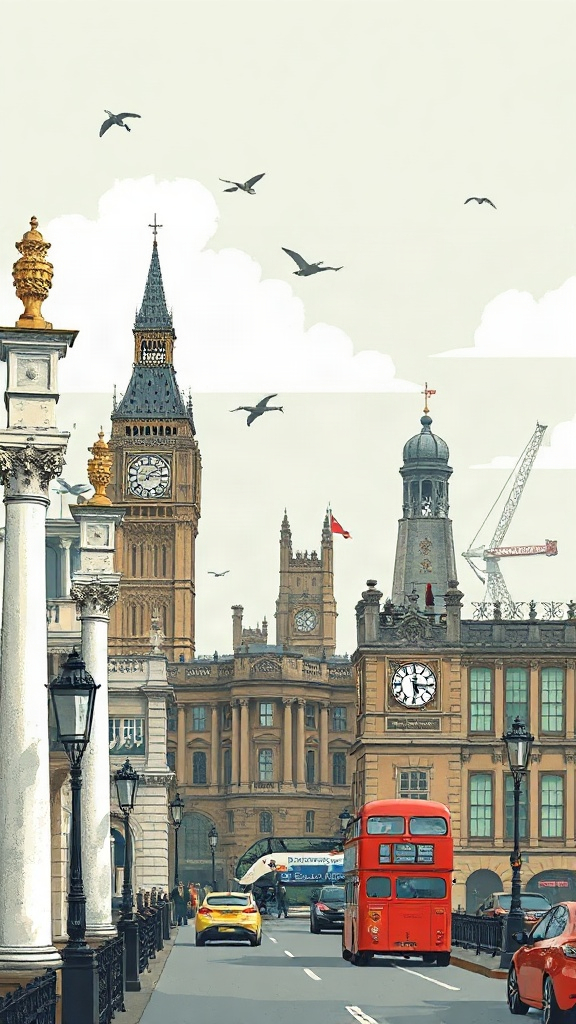
Social history matters here as much as built heritage. Communities across the East End, docklands and inner suburbs have been shaped by waves of migration, each adding cuisine, music and entrepreneurial energy that continues to define London’s identity. Markets, small businesses and cultural institutions keep that social memory alive, and grassroots preservation campaigns often succeed in saving local landmarks and streetscapes from wholesale redevelopment.
Conservation and development exist in a careful negotiation. Planning policies, heritage protections and community engagement shape which structures are kept, adapted or replaced. Archaeological watching briefs are standard during major excavations, reminding developers that beneath even the most modern construction lies a story worth recording.
For visitors and residents, London’s appeal lies in its layered experience: you can stand on a modern plaza and look down onto Roman remains, then stroll into a medieval church or a converted warehouse that now hosts contemporary art. That interleaving of past and present is not merely picturesque; it informs how the city adapts to new challenges—transport, housing and climate resilience—while honoring the places and people that made it. The result is a city that feels both ancient and alive, where every street hints at a chapter in a long, ongoing story.
