
London is a city built on layers — literal and cultural.
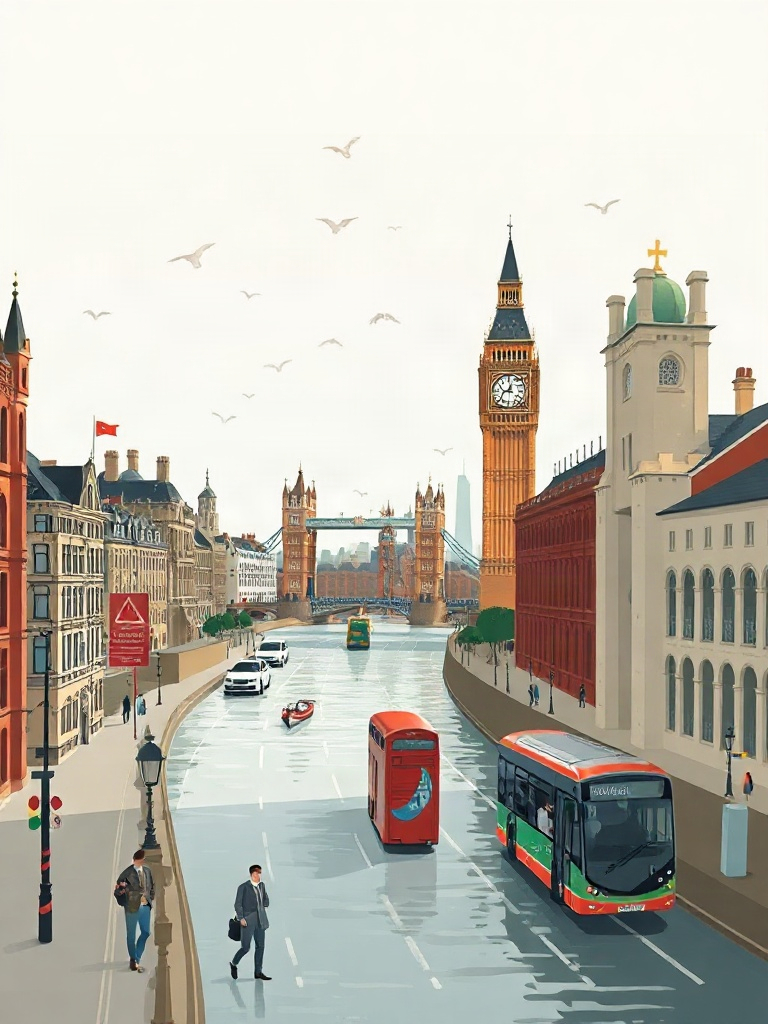
Walk any major street and you move through Roman foundations, medieval lanes, grand Tudor facades, Victorian brickwork and sleek glass towers. That palimpsest is what gives London its unique character: a living museum where the past shapes daily life.
The city began as a river port.
The Thames always mattered more than any single street plan; its bends set trade routes and settlement patterns. The Romans established a fortified town on the north bank, leaving traces in the road grid and in occasional stonework unearthed during construction. After the Roman withdrawal, the settlement evolved through the medieval period into a patchwork of guildhalls, churches and market squares. Narrow alleys and hidden courtyards from those eras still surface in the oldest neighborhoods.
Several events dramatically reshaped the urban fabric. A major conflagration swept through central districts, clearing wooden medieval streets and prompting ambitious rebuilding.
Later, industrial expansion and the arrival of railways transformed the city again, carving new routes and creating vast warehouses along the river. Air raids in the twentieth century leveled neighborhoods and accelerated modernist rebuilding, while the decline of shipping led to derelict docks that were later reinvented as commercial and residential quarters.
Where to see these layers up close
– Roman London: Look for fragments of the old imperial town in museums and exposed sections along the riverfront in the City.
Street names and the hidden line of the old wall hint at the earlier footprint.
– Medieval and Tudor London: Narrow lanes around the eastern end of the City and south of the river preserve medieval street patterns. Historic churches, timber-framed houses and market alleys reveal everyday life from those eras.
– Great houses and fortresses: Royal palaces and fortified towers serve as focal points for political and social history, offering artifacts, ceremonial rooms and sometimes surprisingly personal displays.
– Industrial and Victorian heritage: Stations, warehouses and public works such as bridges and embankments showcase engineering ambition. Converted warehouses now host offices, galleries and homes, a visible sign of adaptive reuse.
– Modern rebirth: Former docks became financial hubs and residential landscapes. Contemporary museums and interpretive centers present archaeology from large infrastructure projects, turning contractors’ trench finds into public displays.
Why archaeology matters
Every building project in London tends to be an archaeological dig in disguise. Excavations routinely produce objects — medieval pottery, Roman coins, skeletal remains — that reframe stories about trade, diet and migration. Large transport projects have been especially fruitful, providing context for how people lived, worked and moved across the city. Finds often end up in local museums, making recent construction part of the ongoing historical narrative.
Experience the history
To really sense London’s timeline, combine the iconic visits with smaller discoveries: underground museum galleries tucked into historic basements, walking tours that follow old ward boundaries, and river trips that explain how the Thames has shaped commerce and culture.
New interpretive trails and revamped museum spaces make it easier to connect fragments to broader themes: resilience after disaster, the mixing of cultures through trade, and the continuous adaptation of built space.
That mixture of continuity and reinvention is the city’s defining story. Historic sites aren’t just relics; they are active ingredients in a metropolis that constantly repurposes its past to serve present needs.
