
London is a city written and rewritten on top of itself. Walk a few streets and you pass Roman roads, medieval alleys, grand Georgian squares and Victorian ironwork—each layer still visible if you know where to look.
That palimpsest quality is what makes London history endlessly compelling: the past isn’t boxed away in museums, it’s woven into the fabric of everyday life.
Roman foundations and forgotten streets
The original trading settlement that gave rise to London grew up around the Thames. Archaeological digs beneath modern office blocks and stations keep revealing the Roman grid: paved roads, timber docks, and fragments of domestic life. Occasional dramatic finds—sections of an amphitheatre, ritual altars, and mosaics—remind visitors that beneath steel and glass there was a bustling Roman town whose street plan influences the modern layout.
Medieval city and civic life
After the Roman phase, London’s medieval heart took shape around the river, cathedral, and market places. Narrow lanes and churchyards still map that era. Remnants of the old defensive wall, medieval guildhalls and market records speak to a city organized around trade, craft and religious life.
Many of the public rituals and civic institutions that modern London inherited trace their roots to these medieval structures.
Transformation by fire and rebuilding
A catastrophic urban fire cleared large swathes of timber-built streets in the wake of a devastating blaze. That disaster prompted a wave of rebuilding that reshaped the skyline, led to stricter building regulations and produced some of the city’s most iconic landmarks, including a reimagined cathedral that dominates the skyline near the river. The event also accelerated a move from narrow, labyrinthine streets toward wider thoroughfares and more resilient materials.
Industrial growth and modern infrastructure
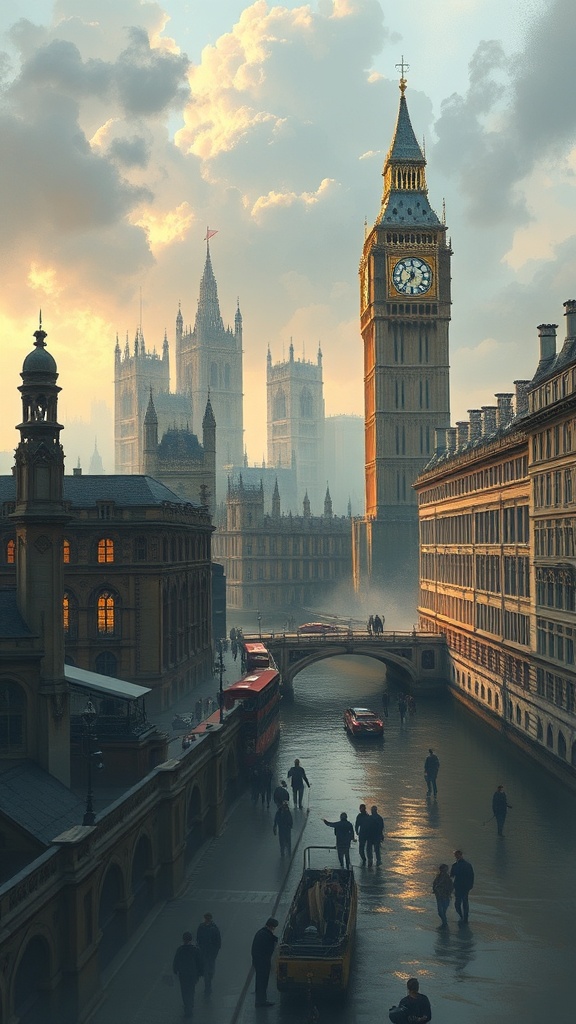
The city’s waterfront and docklands expanded as global trade intensified, and the industrial era reshaped entire neighborhoods. Ambitious public works tackled sanitation, transport and public health—sewer networks, bridges and rail lines rewired the metropolis and allowed the city to grow upward and outward.
The subterranean rail network that commuters use daily began as a bold solution to surface congestion and has become part of London’s identity.
War, loss and renewal
Wartime bombing left deep scars on the cityscape, destroying whole districts and prompting urgent reconstruction. The post-war period saw a mix of rapid rebuilding, modernist experimentation and later conservation efforts that sought to reconcile new needs with historic character. That cycle of loss and renewal continues to influence debates about preservation, housing and urban design.
Archaeology beneath modern projects
Large-scale construction projects and transport upgrades routinely expose long-buried remains.
Excavations commonly reveal human stories—a medieval cemetery here, Roman pottery there—turning construction sites into temporary time capsules. Museums and public displays often showcase these discoveries, making it easy to connect a modern tube stop to people who lived and worked on the same ground centuries earlier.
Living history: how to explore
The best way to experience London’s history is to follow its layers. Walk the Thames paths, visit the cathedral precincts, explore local museums with archaeological collections, and take guided walks that trace Roman walls, medieval markets and Victorian engineering.
Many heritage sites combine interpretation with hands-on displays, so you can see how past innovations shaped present-day city life.
London’s history isn’t static—archaeology, conservation debates and changing uses of old buildings keep the conversation alive. Every redevelopment project, heritage campaign and museum exhibition adds a new paragraph to the city’s long, ongoing story.
