
London is a palimpsest: a living city where Roman foundations sit beneath glass-and-steel towers, medieval alleys open onto wide Georgian squares, and echoes of past disasters have shaped the streets people walk today. Tracing London’s history reveals how geography, commerce and resilience made a small riverside settlement into one of the world’s most layered capitals.
The Thames has always been the city’s spine. A natural crossing attracted early settlers and created a trading hub that grew steadily as ships brought goods, people and ideas. The first major settlement left behind roads, defensive earthworks and pottery that archaeologists still uncover when new buildings go up.
Those finds—coins, tiles, even the outline of an amphitheatre—offer a direct line to an early urban life whose footprint survives under modern streets.
Medieval London built on that foundation. Narrow lanes, market squares and the first bridge across the Thames concentrated political power and commerce. Churches and guildhalls defined neighborhoods, while fortifications and the river shaped where people lived and worked.
Many of the city’s best-known institutions grew out of this era, and a stroll through older districts shows how medieval patterns persist in street names and building plots.
A catastrophic urban fire transformed the cityscape centuries later. The blaze swept through tightly packed wooden buildings, prompting a massive rebuilding effort that introduced wider streets and stone construction. This rebuilding shaped the skyline around the river and provided an opportunity for architects to leave a lasting mark—most notably through landmark church spires and civic buildings that remain focal points today.
Industrialization accelerated change again, converting quays and warehouses along the Thames into a global trade network. Docks, railways and new neighborhoods expanded the metropolis outward. That growth brought wealth and also spurred social reform, as planners and philanthropists responded to overcrowding and public health challenges.
Victorian-era civic projects—bridges, museums, rail termini—created much of the infrastructure that still defines travel and culture across the city.
Conflict left its own marks.
Wartime bombing reshaped neighborhoods and accelerated modernist rebuilding in some areas while leaving others to be restored or reinvented.
Post-conflict reconstruction introduced new housing models and public architecture, while later economic shifts turned former industrial zones into commercial and residential quarters. The regeneration of riverside docks into mixed-use developments shows how adaptive reuse can reconnect old industrial landscapes with contemporary urban life.
Archaeology and museums play a crucial role in making London’s layers visible. Excavations routinely turn up objects that change understanding of daily life in past centuries; small displays and major exhibitions help visitors connect with social histories, not just grand events. Historic sites—from the Roman remains tucked beneath civic buildings to open-air displays and reconstructed streets—invite exploration and reveal how ordinary people shaped the city as much as rulers and planners did.
For visitors and residents alike, the best way to experience London’s history is by walking its streets, following the river, and visiting museums and surviving monuments. Each district tells a different story: a market square that evolved from medieval trade, a church rebuilt after disaster, a warehouse converted into creative space. These stories combine to form a city that continually reinvents itself without erasing the past.
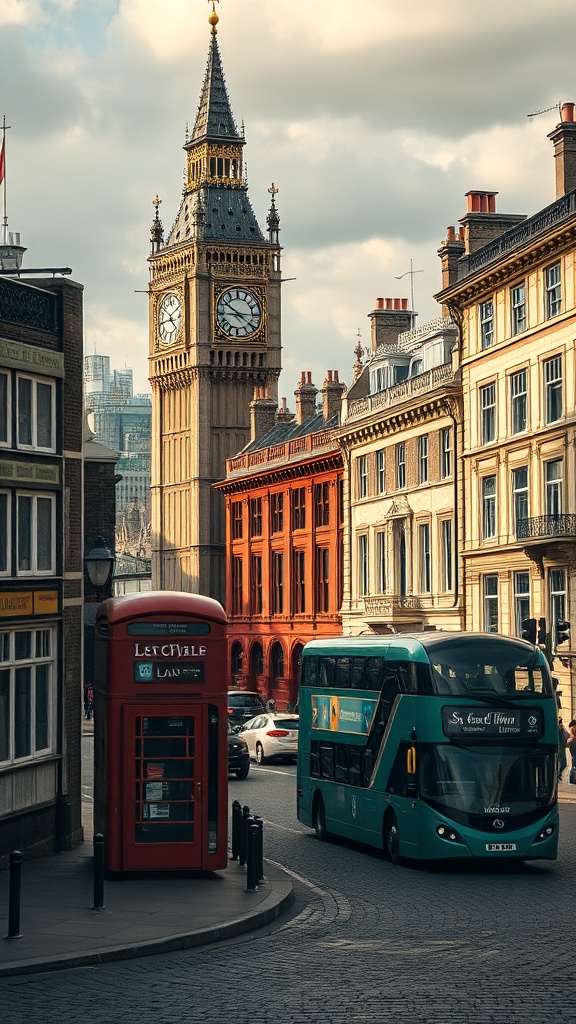
London’s appeal lies in that ongoing conversation between past and present. Every construction project, museum display and neighborhood conservation effort contributes a new chapter, and exploring the city becomes an exercise in discovering how history is embedded in everyday life.
