
London’s history is a living atlas: every street, bridge, and ruined wall tells a story. From its Roman foundations to its modern skyline, the city layers epochs on top of one another so thoroughly that a walk across central London becomes an archaeological tour. For anyone drawn to the past, the capital offers a compact, walkable narrative of empire, commerce, crisis, and reinvention.
Start with the Thames—the artery that defined London’s growth. The river shaped trade routes and settlement patterns long before the city became a global hub. Early settlers established a trading port whose footprint can still be traced under modern streets. Archaeological digs carried out during redevelopment projects often turn up Roman pottery, timber wharves, and traces of the original riverside defenses, reminding visitors that the riverbank has always been a strategic and economic focal point.
Medieval London consolidated power around the great monuments that endure today.
The stone silhouette of the Tower of London marks both fortress and royal treasury; nearby, the lanes of the old City still follow medieval plots. Markets and guilds once governed daily life here, and echoes of that civic energy remain in ancient livery halls and narrow alleys where stories of commerce and conflict accumulated over centuries.
The city’s capacity to reinvent itself is perhaps most famously illustrated by its responses to disaster. Major conflagrations and pandemics reshaped urban design, building regulations, and public health, prompting waves of reconstruction that created baroque facades, wide boulevards, and modern sewage systems. Each rebuilding phase brought new architectural styles and urban priorities, which means that walking across London is also a tour of urban planning choices made under pressure.
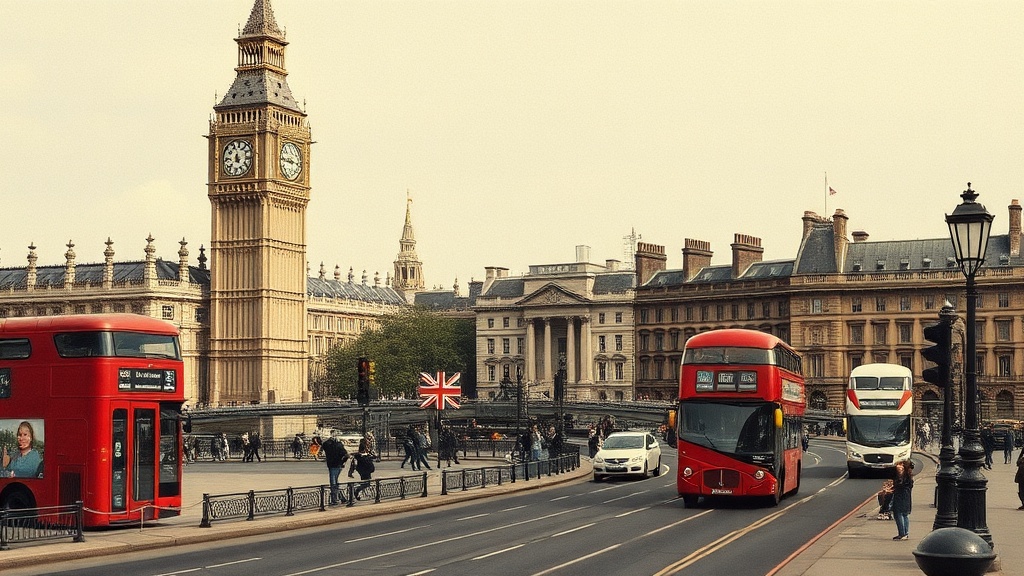
Industrial expansion transformed London yet again. Railways, docks, and warehouses turned large swathes of the city into engines of trade.
The Victorian era left a particularly distinctive imprint: grand civic buildings, ornate rail terminals, and social institutions sprang up alongside gritty industrial neighborhoods. Those contrasts set the stage for cultural movements and social reform campaigns that still resonate in public institutions and museums.
Conflict also carved deep marks. Bombing campaigns dramatically altered neighborhoods, leading to post-conflict reconstruction that introduced modernist housing and new cultural infrastructure. These episodes are preserved not only in memorials but in the urban fabric—repaired streets, rebuilt theaters, and repurposed industrial sites that now house galleries, offices, or housing.
Today, heritage and regeneration often intersect. Old warehouses become art spaces, decommissioned docks turn into mixed-use developments, and archaeological finds are showcased in local museums. Institutions across the city curate exhibitions that contextualize artifacts from every era, while guided walks and digital apps help residents and visitors decode layers of history visible in brickwork and paving stones.
For practical exploration: follow the Thames to experience Roman, medieval, and industrial layers; tour the City to see medieval and financial history side by side; and visit cultural districts where old and new coexist. Small museums and historic houses offer intimate encounters with the past, and new museum displays often incorporate recent finds from construction-led archaeology.
London’s history isn’t confined to textbooks. It’s a sequence of responses to economic opportunity, technological change, and human hardship—expressed in architecture, street plans, and cultural life.
For anyone curious about how cities evolve, London provides a richly textured case study: continually changing, always readable for those who know where to look.
