
London is a city built on layers — literal and cultural — where every street can reveal a different era. From Roman foundations to medieval churches, Tudor courtyards to Victorian train sheds, the capital’s long, tangled history is visible if you know where to look.
That blend of continuity and change makes exploring London history endlessly rewarding for residents and visitors alike.
Begin beneath the modern streets. The Romans founded a settlement that became a key trading port on the Thames; remnants of that period survive in unexpected places, tucked under glass floors and around winding alleys. Museums and archaeological displays throughout the city showcase mosaics, walls and artifacts that speak to Londinium’s role as a provincial hub of trade and administration.
Move up to the medieval city, and the old defensive walls, narrow lanes and guildhalls tell another story. Iconic structures such as the Tower served as fortress, royal palace and prison across many chapters of the city’s life. Cathedrals and parish churches dominate skylines and neighbourhood identity, reflecting a time when religious institutions shaped everyday London life. Much of the medieval street pattern survives in central districts, making walking the most immediate way to feel historical continuity.
A dramatic turning point in the city’s fabric came with a conflagration that reshaped central neighborhoods. That disaster cleared old wooden streets and prompted ambitious rebuilding: broader thoroughfares, grand stone churches and iconic civic structures that remain focal points.
The rebuilding influenced architectural thinking and urban planning, and landmarks from that era define views across the city.
The arrival of heavy industry and rail transformed London again. Victorian engineering left an indelible mark — bridges, stations, docks and ornate public buildings expressed confidence in technology and empire. The underground network, one of the capital’s most distinctive legacies, began as a solution to crowding and growth and evolved into the arteries of a global metropolis.
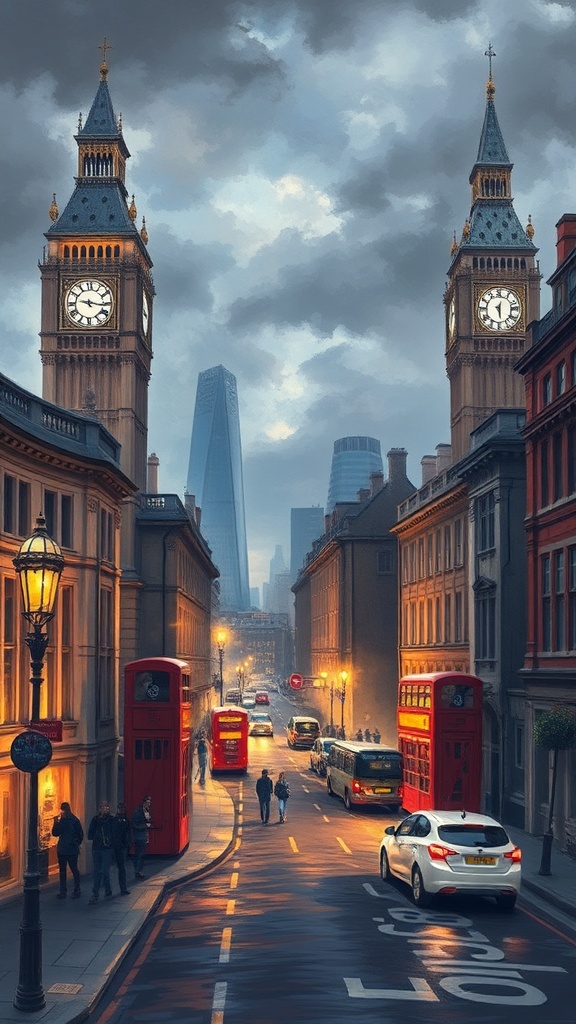
Many Victorian institutions and terraces now sit side-by-side with contemporary developments, creating striking juxtapositions.
War, bomb damage and social change prompted waves of reconstruction and adaptation. Post-war rebuilding and later economic shifts led to dramatic regeneration in former docklands and industrial zones, turning warehouses into apartments, former shipping hubs into financial centers, and quaysides into cultural quarters.
Adaptive reuse is a recurring theme: warehouses becoming galleries, railway arches becoming craft breweries, and industrial relics becoming focal points for new public life.
Preservation debates continue to shape London.
Conservation areas, listed buildings and heritage-led regeneration aim to protect character while allowing necessary growth. That tension between preservation and modernization means parts of the city resist homogenization, while others embrace bold architecture and contemporary design.
The result is an urban tapestry where a medieval church can sit in a plaza overlooked by glass towers.
For those who want to dive in, practical ways to engage with London history include walking routes that trace Roman, medieval and industrial pasts; guided tours focusing on specific episodes such as policing, commerce or architecture; and museum visits where artifacts and immersive displays bring hidden stories to light. Look for lesser-known sites too: ancient alleys, surviving coaching inns, and public plaques that mark vanished neighborhoods.
London’s history is not a static museum piece but an ongoing conversation between past and present. Exploring its layers helps explain why neighborhoods feel distinct, why street names persist, and how a modern city continuously reinvents itself while carrying echoes of what came before. Take time to look down, look up and follow the alleys — history is waiting in plain sight.
