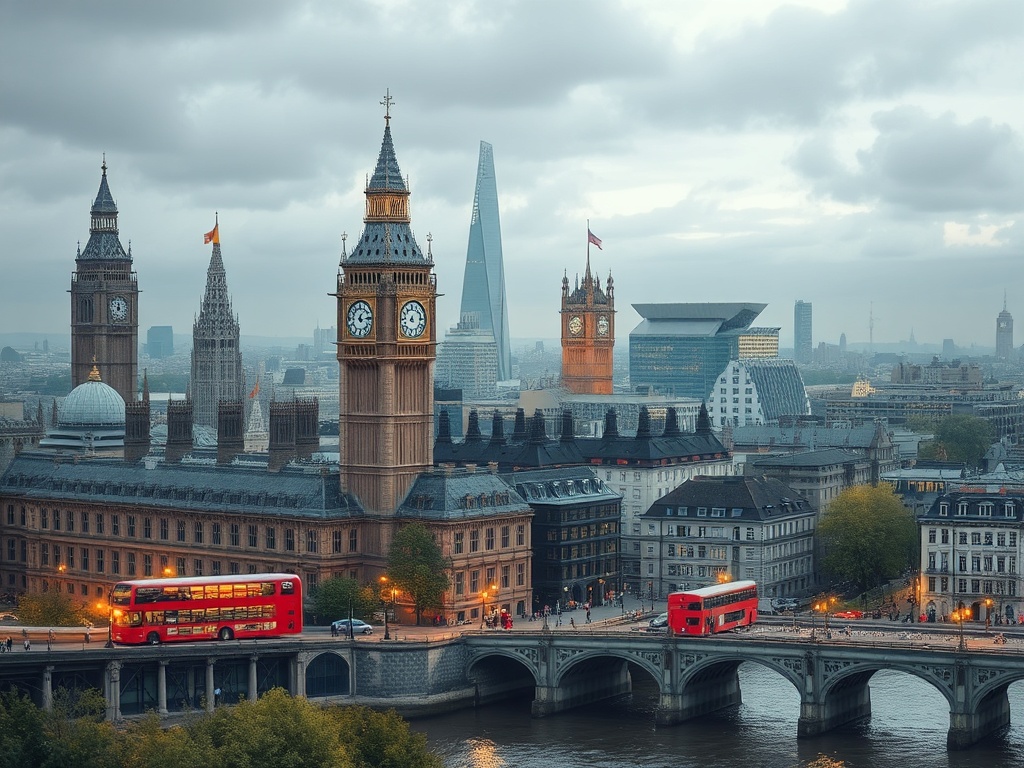
London is a living museum: every street, bridge, and alley layers a chapter of history that shaped a global capital. From a riverside Roman settlement to a modern metropolis, the city’s evolution offers a compact, walkable narrative of empire, commerce, culture, and resilience.
Origins along the Thames
London’s story begins where the River Thames provided a natural crossing and deep-water access. A Roman trading and administrative outpost grew around that ford, establishing the core street grid and riverfront that still influence the city’s layout. Archaeological sites and place names preserve that origin, with museum displays and city walks revealing the remains of walls, roads, and mosaics beneath modern glass and stone.
Medieval power and commerce
As trade flourished, medieval London became a magnet for merchants, guilds, and religious institutions. The area around the river remained the commercial heart while political power consolidated near the palace and abbeys of Westminster. Stone towers and fortified walls, some fragments of which survive, reflected a city balancing commerce with defense. Markets, public executions, and guild halls shaped civic life, and many modern street names still echo those medieval functions.
Landmark architecture and reinvention
Iconic sites such as the Tower and Westminster have served shifting roles—fortress, royal palace, treasury, and prison—mirroring the changing priorities of the state. Cathedrals and parish churches chart stylistic transitions: Romanesque foundations give way to soaring Gothic arches and later baroque rebuilding. A major conflagration razed large parts of the riverside city, prompting a dramatic rebuilding campaign led by a prominent architect whose influence endures in domes and churches across the skyline.
Industrial dynamism and urban transformation
The arrival of large-scale manufacturing and steam power accelerated population growth and urban change. Railways tunneled and bridged the Thames, while docks expanded to handle global trade. Victorian civic improvements—sewers, parks, and institutions—addressed the challenges of dense, industrial life. Grand museums, galleries, and public buildings reflected an era obsessed with progress and display.
Conflict and resilience
London’s resilience was tested again by aerial bombardment during a major 20th-century conflict. Entire neighborhoods were reshaped, but the city’s spirit of repair and adaptation turned destruction into opportunities for modernization and new housing, transport, and cultural infrastructure. Postwar rebuilding and subsequent economic shifts prompted waves of redevelopment, especially along formerly industrial riverfronts.
Regeneration and multicultural identity
Former docks and warehouses have been transformed into mixed-use neighborhoods with modern skyscrapers, creative spaces, and new parks. Cultural diversity is now one of London’s defining features—food, festivals, and faiths from across the globe coexist alongside heritage institutions.
Museums, historic houses, and curated walking routes help visitors trace the threads between immigrant communities, trade networks, and urban form.
Where to start exploring
For an immersive overview, start at riverside sites that encapsulate many eras: fortified towers, ceremonial palaces, historic bridges, and the compact remains of Roman and medieval streets. Museums dedicated to the city’s past provide archaeology, maps, and immersive exhibits that make deep time feel immediate. Walking routes—along the river, through markets, and into preserved courts and alleys—reveal the small details that textbooks miss.
Why it matters
London’s history is not a static display; it’s an ongoing conversation between past and present. Understanding how the city has repeatedly reinvented itself—through trade, calamity, and creativity—offers practical lessons about urban resilience and cultural continuity.
Whether you’re a casual visitor or a local seeking fresh perspective, exploring London’s layered past rewards curiosity with insight and surprise.