
London’s story is a layered mosaic of arrival, reinvention, and resilience.
From its beginnings as a riverside trading post to its role as a global metropolis, the city’s history is visible at every bend of the Thames, in narrow alleys and soaring modern skylines alike.
Origins and Roman foundations
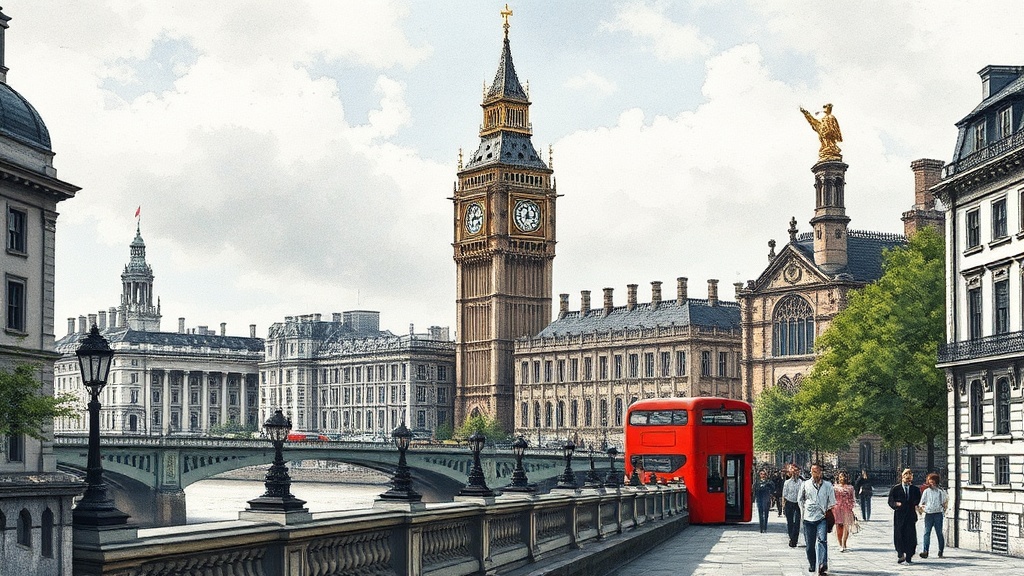
The river has always defined the settlement.
Early settlers were drawn to the natural crossing and deep-water access, which supported trade and rapid growth. The Romans established a planned town with defensive walls and a river port, laying out streets that still influence the modern grid. Remnants of that era surface in museums and beneath modern pavement, reminding visitors that London’s past rests directly beneath its present.
Medieval life and civic power
As the settlement grew, so did its institutions. Markets clustered near river crossings, monasteries and guild halls shaped daily life, and the emergence of strong civic structures turned the town into a center of commerce and law. Fortifications and royal residences signaled the city’s political importance, while craft neighborhoods and docks fueled prosperity. Many churches and narrow lanes from that time survive, offering a window into urban life before modern engineering remade the landscape.
Disaster, rebuilding, and reinvention
Disasters have repeatedly transformed the city. A devastating urban fire reshaped building practices and led to ambitious rebuilding efforts that encouraged the rise of new architectural styles. Later waves of industrialization and transportation innovation—first with improved roads and river commerce, then with rail and docks—reoriented neighborhoods and created new hubs of activity. The once-thriving docklands would later undergo dramatic regeneration, blending historic warehouses with contemporary waterfront developments.
Wartime endurance and cultural shifts
The city has also been tested by conflict. Sustained bombing campaigns damaged vast swathes of housing and industry, leaving scars that guided post-conflict reconstruction and social change. Those experiences contributed to a resilient civic identity, prompting large-scale housing projects, cultural renewal, and efforts to preserve memory through museums, memorials, and oral histories.
Heritage and modern identity
Historic monuments coexist with cutting-edge architecture.
Castle-like fortresses and ceremonial halls anchor civic rituals, while museums preserve objects spanning millennia.
Streets that once hosted horse-drawn carts now carry a mix of bicycles, buses, and quiet neighborhoods carved out of former industrial zones. This juxtaposition makes the city a living archive—where one can trace the arcs of trade, empire, migration, and technological change.
Practical tips for exploring historic London
– Start along the river: the Thames walk links many key sites and reveals how the city developed around the waterway.
– Visit museums that contextualize objects with layered narratives, from ancient foundations to recent social history.
– Explore lesser-known neighborhoods to see preserved terraces, market streets, and converted warehouses that tell local stories.
– Take guided walks focused on specific themes—such as medieval law, maritime trade, or wartime experiences—to gain richer insight.
Why it matters
Understanding the city’s history highlights how urban life adapts to crisis and opportunity. Preservation efforts, community projects, and adaptive reuse of historic buildings show how past and present can enhance each other. For visitors and residents alike, the city offers an ongoing lesson in how a place can remain dynamic while honoring the threads that made it what it is.
Whether drawn by ancient walls, grand ceremonial sites, or the hum of restored docks, those who explore the city’s past find a complex, layered narrative that continues to unfold every day.
